
How To Make A Successful Pixie Mini Macaw Tutorials On Home
페이지 정보
본문
Pixie Mini Macaw
They are easy to train and are not aggressive. They are best handled regularly and are able to mimic words.
Macaws are fed pellets, fresh fruits and vegetables and seeds. They also need some perches made of wood to climb and chew.
Macaws are prone to developing a dominant streak, particularly when first entering an unfamiliar environment. To prevent this, an avian behaviorist and veterinarian should be advised.
Training
Macaws are extremely intelligent birds, and they thrive on regular handling, enrichment, care and a space to exercise. They love to play, explore their surroundings and manipulate objects. They often love being hugged or "skritched" when they trust the person they are with.
Macaws who are not handled properly can become aggressive, territorial or destructive. The boredom of a macaw can result in feather picking, which is a form of self-mutilation. To avoid boredom, offer plenty of toys that are textured and numerous perches. Playing with toys that simulate preening can also help keep feathers from being destroyed by boredom. Talk to a trained avian behaviorist and/or vet if these behaviors occur.
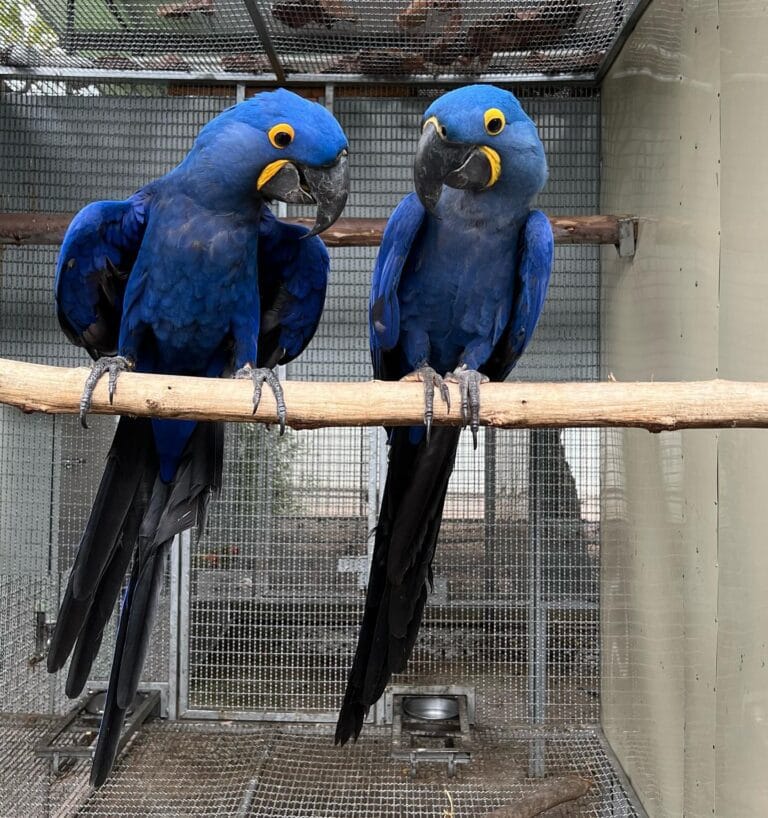 Young macaws who are fed by hand are well-adjusted to new environments and training. They should be exposed to new people, car trips visits to hospitals guests at home, other pets (including cats and dogs) and other birds as early as possible. They are easily imprinted and need regular handling from a young age to avoid developing one person bonds. These parrots may be loud and aggressive when this happens. Discipline, leadership, patience, hooding (covering the head) and a sense of ritual are crucial in reversing these behaviors.
Larger macaws like the Blue and Gold, Scarlet, Military and hyacinth macaw lifespan are more prone to developing behavioral issues as adults. Hormonal imbalances can trigger anxiety and depression. These issues can lead to serious health issues and cause a difficult situation for both the parrot owner and the parrot.
Mini macaws are generally more docile than their larger counterparts. They can be taught basic commands, tricks, and words. They do not bond as readily with their owners and will not often snuggle or cuddle up to them. To build a relationship spend a few hours every day with your pet outside their cage and speak to them in a soothing tone to get them accustomed to your voice. Once you have a relationship it is possible to teach your bird to jump onto your finger and learn to interact with other people in a secure setting.
Care
Macaws are intelligent, social birds that need interaction with their human counterparts. They are susceptible to depression and boredom if not given enough daily time with their friends. A macaw who is depressed may self-mutilate, pulling out its own feathers. This can be a risk.
To avoid these issues, early socialization and training is crucial. It is recommended that a macaw be treated regularly to strengthen its bond with its owner, encourage general health, and allow easy inspection of the bird's body for injuries or any other abnormalities. Macaws can also be destructive, so owners must give their pets plenty of toys that are heavy duty to keep them away from wood furniture and other items that are tempting in the home.
Regularly trim the macaw's nail. This allows you to handle the bird, and the nails are less likely to be caught on toys and cages. Cutting the nails short helps keep them clean and healthy.
The size of the cage for a macaw is very important, as these large birds require lots of space to exercise and fly freely. A minimum cage size of 3 feet wide, 2.5 feet deep and 6 feet high is recommended. These large birds need to be able to spread their wings when in flight. They should also have space for climbing, perching and toys.
Providing your macaw with a variety of foraging chewable wood and rope toys, puzzles that are easy to take apart, and mechanical toys is an excellent way to provide daily enrichment. Offering an array of branches for your macaws to climb on and hide in is another method to give your pet physical stimulation.
If your macaw is acting strangely or is breathing openly or gasping for air or is fluffed up and unresponsive, it may be trying to lay an egg. The eggs can place pressure on the nerves that control the legs and cause self-mutilation and paralysis. So when you notice this behavior, call your veterinarian or visit an animal emergency clinic.
Feeding
Macaws are omnivores and will consume fruits and vegetables in their diet. They also can eat pellets, nuts, and commercial parrot food.
It is essential to provide them a variety of food throughout the day to ensure their diet remains healthy. They consume less than their larger counterparts, which means that owners will not need to make as many trips to the pet shop. This could save them money, which is always welcome!
The Hahn's Macaw is a great talking animal, with a booming and short lived call that they use to find other members of their flock. They will also make loud, piercing contact calls when they are anxious or scared.
It is a good idea to start your macaw off by touching the entire body, particularly in the wings and behind the head. They love being stroked and love being admired! To ensure that your bird is well, you must conduct annual examinations. This is the best time to examine your bird for parasites, fecal tests and other health issues.
If you're thinking about getting a catalina macaw lifespan you will need an enclosure that measures at least 36" by 24" by 24". This will allow your macaw to stretch out and fly around. To stay healthy and happy, they need to be able to work out their natural energy.
The cage must be well ventilated and should have a variety of perches to provide the bird with options. The macaw will not become stressed or bored when they have a means to release their energy. These tiny birds are extremely active in the wild, and they must be able to let loose their energy when they are at home.
Adolescent hormones pose a major issue for these birds. As they grow older, they can act like teenagers, and can become angry. It can be difficult for pet owners to understand how to be a part of owning a macaw bird's life. The best thing you can do is to encourage positive behavior and be patient.
Health
Macaws are friendly birds that are fond of playing and bonding with their owners. They are intelligent birds that learn to communicate well. They make a great addition to any family and can be a great companion during their 45-50-year-old lifespan. However, they where can i buy a macaw turn aggressive if they aren't socialized properly and may be difficult to manage in the event of abuse or neglect. Training and lots of handling are essential to keep this species content and a wonderful pet for the family.
Hahn's mini macaws are fantastic way to have the same fun and excitement as larger macaws, but in a much smaller size. They are very affectionate and love cuddling but don't exhibit the same tendency to bite or nip as frequently as larger macaws. They are extremely active performers, but are calm and quiet as well. They are a great option for those looking to get macaws but don't have the space required by larger birds.
The chestnut-fronted Macaw also known as a severe macaw price (Read the Full Posting) macaw is among the largest breeds of mini macaws. It is green with patches of blue macaw bird price and red on the wings. The head has chestnut brown patches with lines of black feathers that run over the eyes. The chestnut-fronted macaw can be aggressive during puberty and this can cause issue in the wild. This bird is tolerant of regular handling and enjoys learning new things.
Macaws do not tend to be territorial, but they can become aggressive when their surroundings become too crowded or stressed. If this happens, it is recommended to place the bird in a more isolated room until they calm down. A vet can give your bird a thorough physical exam to check the health of their eyes, ears as well as their lungs, heart and coelom. A stool sample is taken to check for parasites.
Birdsville sells a wormer named Worm-Away that is perfect for worming your macaw. Also, you should change the water in the cage on a regular basis and ensure that it has enough fresh air. Keep the cage out of direct sunlight as it can cause the bird to become sick.
They are easy to train and are not aggressive. They are best handled regularly and are able to mimic words.
Macaws are fed pellets, fresh fruits and vegetables and seeds. They also need some perches made of wood to climb and chew.
Macaws are prone to developing a dominant streak, particularly when first entering an unfamiliar environment. To prevent this, an avian behaviorist and veterinarian should be advised.
Training
Macaws are extremely intelligent birds, and they thrive on regular handling, enrichment, care and a space to exercise. They love to play, explore their surroundings and manipulate objects. They often love being hugged or "skritched" when they trust the person they are with.
Macaws who are not handled properly can become aggressive, territorial or destructive. The boredom of a macaw can result in feather picking, which is a form of self-mutilation. To avoid boredom, offer plenty of toys that are textured and numerous perches. Playing with toys that simulate preening can also help keep feathers from being destroyed by boredom. Talk to a trained avian behaviorist and/or vet if these behaviors occur.
Young macaws who are fed by hand are well-adjusted to new environments and training. They should be exposed to new people, car trips visits to hospitals guests at home, other pets (including cats and dogs) and other birds as early as possible. They are easily imprinted and need regular handling from a young age to avoid developing one person bonds. These parrots may be loud and aggressive when this happens. Discipline, leadership, patience, hooding (covering the head) and a sense of ritual are crucial in reversing these behaviors.Larger macaws like the Blue and Gold, Scarlet, Military and hyacinth macaw lifespan are more prone to developing behavioral issues as adults. Hormonal imbalances can trigger anxiety and depression. These issues can lead to serious health issues and cause a difficult situation for both the parrot owner and the parrot.
Mini macaws are generally more docile than their larger counterparts. They can be taught basic commands, tricks, and words. They do not bond as readily with their owners and will not often snuggle or cuddle up to them. To build a relationship spend a few hours every day with your pet outside their cage and speak to them in a soothing tone to get them accustomed to your voice. Once you have a relationship it is possible to teach your bird to jump onto your finger and learn to interact with other people in a secure setting.
Care
Macaws are intelligent, social birds that need interaction with their human counterparts. They are susceptible to depression and boredom if not given enough daily time with their friends. A macaw who is depressed may self-mutilate, pulling out its own feathers. This can be a risk.
To avoid these issues, early socialization and training is crucial. It is recommended that a macaw be treated regularly to strengthen its bond with its owner, encourage general health, and allow easy inspection of the bird's body for injuries or any other abnormalities. Macaws can also be destructive, so owners must give their pets plenty of toys that are heavy duty to keep them away from wood furniture and other items that are tempting in the home.
Regularly trim the macaw's nail. This allows you to handle the bird, and the nails are less likely to be caught on toys and cages. Cutting the nails short helps keep them clean and healthy.
The size of the cage for a macaw is very important, as these large birds require lots of space to exercise and fly freely. A minimum cage size of 3 feet wide, 2.5 feet deep and 6 feet high is recommended. These large birds need to be able to spread their wings when in flight. They should also have space for climbing, perching and toys.
Providing your macaw with a variety of foraging chewable wood and rope toys, puzzles that are easy to take apart, and mechanical toys is an excellent way to provide daily enrichment. Offering an array of branches for your macaws to climb on and hide in is another method to give your pet physical stimulation.
If your macaw is acting strangely or is breathing openly or gasping for air or is fluffed up and unresponsive, it may be trying to lay an egg. The eggs can place pressure on the nerves that control the legs and cause self-mutilation and paralysis. So when you notice this behavior, call your veterinarian or visit an animal emergency clinic.
Feeding
Macaws are omnivores and will consume fruits and vegetables in their diet. They also can eat pellets, nuts, and commercial parrot food.
It is essential to provide them a variety of food throughout the day to ensure their diet remains healthy. They consume less than their larger counterparts, which means that owners will not need to make as many trips to the pet shop. This could save them money, which is always welcome!
The Hahn's Macaw is a great talking animal, with a booming and short lived call that they use to find other members of their flock. They will also make loud, piercing contact calls when they are anxious or scared.
It is a good idea to start your macaw off by touching the entire body, particularly in the wings and behind the head. They love being stroked and love being admired! To ensure that your bird is well, you must conduct annual examinations. This is the best time to examine your bird for parasites, fecal tests and other health issues.
If you're thinking about getting a catalina macaw lifespan you will need an enclosure that measures at least 36" by 24" by 24". This will allow your macaw to stretch out and fly around. To stay healthy and happy, they need to be able to work out their natural energy.
The cage must be well ventilated and should have a variety of perches to provide the bird with options. The macaw will not become stressed or bored when they have a means to release their energy. These tiny birds are extremely active in the wild, and they must be able to let loose their energy when they are at home.
Adolescent hormones pose a major issue for these birds. As they grow older, they can act like teenagers, and can become angry. It can be difficult for pet owners to understand how to be a part of owning a macaw bird's life. The best thing you can do is to encourage positive behavior and be patient.
Health
Macaws are friendly birds that are fond of playing and bonding with their owners. They are intelligent birds that learn to communicate well. They make a great addition to any family and can be a great companion during their 45-50-year-old lifespan. However, they where can i buy a macaw turn aggressive if they aren't socialized properly and may be difficult to manage in the event of abuse or neglect. Training and lots of handling are essential to keep this species content and a wonderful pet for the family.
Hahn's mini macaws are fantastic way to have the same fun and excitement as larger macaws, but in a much smaller size. They are very affectionate and love cuddling but don't exhibit the same tendency to bite or nip as frequently as larger macaws. They are extremely active performers, but are calm and quiet as well. They are a great option for those looking to get macaws but don't have the space required by larger birds.
The chestnut-fronted Macaw also known as a severe macaw price (Read the Full Posting) macaw is among the largest breeds of mini macaws. It is green with patches of blue macaw bird price and red on the wings. The head has chestnut brown patches with lines of black feathers that run over the eyes. The chestnut-fronted macaw can be aggressive during puberty and this can cause issue in the wild. This bird is tolerant of regular handling and enjoys learning new things.
Macaws do not tend to be territorial, but they can become aggressive when their surroundings become too crowded or stressed. If this happens, it is recommended to place the bird in a more isolated room until they calm down. A vet can give your bird a thorough physical exam to check the health of their eyes, ears as well as their lungs, heart and coelom. A stool sample is taken to check for parasites.
Birdsville sells a wormer named Worm-Away that is perfect for worming your macaw. Also, you should change the water in the cage on a regular basis and ensure that it has enough fresh air. Keep the cage out of direct sunlight as it can cause the bird to become sick.
댓글목록
등록된 댓글이 없습니다.