
A Productive Rant About Kitchen Island Extractor
페이지 정보
본문
Selecting a Kitchen Island Extractor Hood
A kitchen island extractor hood will offer an appealing focal point in your house. They also work to keep your kitchen smell, smoke and moisture-free.
They are generally ducted to the outdoors and can be vented or recirculated. They generally include built-in lighting, illuminating your cooking location. Generally they have a more contemporary style than chimney cooker hoods.
Design
A kitchen island extractor hood is a crucial function in the space, it assists to clear unwanted particulates from the air and keep large open plan areas smoke, odour and heat totally free. There are various designs to pick from, with choices to match all kitchen styles and aesthetic appeals. There are also lots of sizes and extraction capacities to think about when choosing an island hood.
A flush fitting, or island extractor fan type, works by pulling air upwards and either venting it out through a vent kit in the ceiling to an external wall where it's launched outside, or recirculating it through charcoal filters before pushing it back into the space. Both alternatives are effective at getting rid of moisture, odours and heat.
The hood rests on the ceiling above the hob and is typically ducted to an external wall, but it can be a 'boxed in' option, building a box structure within the ceiling that houses the cooker hood and ventilation pipelines. This gives a more seamless, modern-day appearance but might not be ideal for homes with low ceilings. This design of extractor hood is also terrific for producing a declaration piece, particularly when matched with an ornamental lighting function that will actually make it stand apart from the remainder of the kitchen.
Another choice is to buy a hob with an integrated extractor, which has actually the hood constructed into the centre of the hob itself and pulls the odours and smoke down towards it as you prepare. They're more pricey than standard hoods but can conserve space in your kitchen, and some provide a sleek, very little appearance that will mix in with the total style of your cooking location.
The most essential element when picking an extractor hood is the extraction capability, which you can discover out by increasing the hood's wattage by 10. This will offer you a concept of just how much it can remove and is an excellent way to judge the suitability of your chosen model for your kitchen. It's also worth considering just how much you prepare, and if you do a lot of searing or stir-fry cooking, it may be much better to select a more effective model that will be up to the job rather than one that's extremely delicate to steam.
Extraction capacity
An extractor hood does more than clarify; it eliminates smells, smoke and heat from your Kitchen Island Hood (Https://K12.Instructure.Com/Eportfolios/927813/Home/The-Most-Pervasive-Issues-In-Cooker-Island). This is why it's crucial to check the extraction capacity before you purchase one. You can do this by calculating the volume of your room and increasing it by 10. The higher the capacity, the more effective it will be.
There are 4 primary types of cooker hood that can be set up above your kitchen island cooker hoods 60cm. They vary mainly in their ventilation technique and style, with some designs better for kitchen islands than others.
Ducted hoods vent the extracted air outside through a ducting system. These are typically suggested for new builds and extensions as they enable the highest extraction rate. Recirculating hoods recycle the air by passing it through charcoal filters before returning it to your kitchen. These can be more appropriate for existing homes as they do not need a duct to the exterior.
Most of hoods are developed to be discreet; they blend into the ceiling above your cooking location, just revealing the fan when it's activated. They are frequently referred to as concealed or concealed hoods. However, if you want your hood to stand out a bit more, there are lots of designs that protrude above the ceiling, providing a bold and modern appearance.
Ceiling extractors are typically placed over the hob and can be vented to the outdoors or recirculated depending upon your choice and the size of your kitchen. A ceiling extractor can be fitted with a light, which is useful for illuminating your kitchen when you're cooking.
A kitchen ceiling extractor hood can also be used with a downdraft system, which resides in the worktop and rises up over your pots and pans when triggered. These are a great alternative for open strategy cooking areas and can either be vented to the outdoors or recirculated.
Our variety of hoods includes a comprehensive choice of choices to fit every style of kitchen. From minimalist to modern, we have a series of styles and colours to match your kitchen visual.
Lighting
A kitchen island extractor hood is designed to clear your cooking air while functioning as a bold style function. They're readily available in a range hoods for islands of sizes and shapes (some more pretty than others) with various extraction capacity to fit your kitchen design, ventilation requirements and the height of your ceilings.
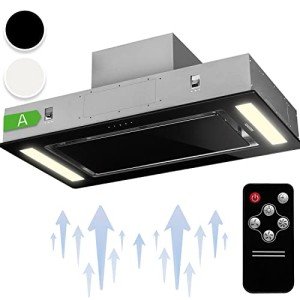 The most typical hood is a downdraft which sits below the worktop and rises directly beside your hob when it's triggered. This type of hood is the quietest option but it may not be as powerful as a ceiling or island extractor fan kitchen island.
Downdraft extractors are usually vented out through the ceiling to an external wall but can likewise be recirculated. When recirculating, the smoke, moisture and odours are sucked into a funnel within the extractor, infiltrated charcoal filters and then pushed back into the space - removing the need for external ventilation.
Island chimney hoods are perfect for large, open-plan kitchen areas as they make a bold design declaration and assistance to separate the space. These hoods are awaited the ceiling above your hob and can be either vented to an external wall or recirculated. A recirculating island extractor will pull the smoke, wetness and odours from around your hob and filter them through charcoal filters before pressing the clean air back into the room - getting rid of the requirement to vent outdoors.
Island hoods can be matched with LED lights to produce an eye-catching design function that's both practical and elegant. The lights can be dimmed and controlled by means of the control board on your hood or the Novy Connect app.
There are many ways to update your kitchen lighting, consisting of changing the bulbs, including accent lighting or wise lighting options. However, one typically neglected method to improve your kitchen's performance and visual appeal is by installing an island extractor hood. Whether you're searching for an effective, quiet extractor or merely desire to upgrade your kitchen lighting, these hoods are a great investment for any homeowner.
Installation
Kitchen island extractor hoods been available in a range of sizes, designs and styles, making them appropriate for all kinds of kitchen areas. They can be developed to mix in with the visual of your kitchen or stand out as a design function. They also have exceptional extraction capability, eliminating cooking smells and enhancing the air quality in your kitchen.
The type of kitchen extractor hood that you select will depend on a variety of factors, including your individual preference and the amount of extraction power you need. There are 3 primary alternatives: island chimney cooker hoods, ceiling hoods and downdraft extractors. Each has its own benefits and downsides.
Chimney style kitchen island extractor hoods are typically installed in bigger kitchen areas and help to keep open-plan kitchen areas odour-free and smoke-free. They have a complete 360-degree specification and can be developed to match the measurements of your kitchen. They can also be vented out through the ceiling or pressed into a chimney to get away outside.
While they are really efficient, island chimney hoods can be more tough to tidy than other kinds of extractor hoods. This is because they sit above the hob and may need to be cleaned frequently to avoid a build-up of grease and smells. Downdraft extractors are an excellent alternative to island hood kitchen chimney hoods as they sit under the hob, minimizing the threat of grease accumulation and removing odours. Nevertheless, they are less reliable than island chimney hoods as they can not be ducted out and can cause issues with individuals who are seated at the breakfast bar or other location around the hob.
Kitchen island hoods are typically installed directly above the hob and are typically ducted out through an incorrect ceiling, creating a trendy and practical addition to your kitchen. They are likewise offered with integrated lighting features, which can be valuable for illuminating your workspace. When picking an island hood, it is necessary to follow the maker's directions thoroughly to ensure that the ductwork is properly routed and linked to the ventilation system.
Island hoods are available in both ducted and recirculating designs, so it's essential to identify your requirements before buying one. Ducted models require a chimney area to vent out through, and can be more costly than recirculating options. However, they are more reliable and can assist to increase the worth of your home.
A kitchen island extractor hood will offer an appealing focal point in your house. They also work to keep your kitchen smell, smoke and moisture-free.
They are generally ducted to the outdoors and can be vented or recirculated. They generally include built-in lighting, illuminating your cooking location. Generally they have a more contemporary style than chimney cooker hoods.
Design
A kitchen island extractor hood is a crucial function in the space, it assists to clear unwanted particulates from the air and keep large open plan areas smoke, odour and heat totally free. There are various designs to pick from, with choices to match all kitchen styles and aesthetic appeals. There are also lots of sizes and extraction capacities to think about when choosing an island hood.
A flush fitting, or island extractor fan type, works by pulling air upwards and either venting it out through a vent kit in the ceiling to an external wall where it's launched outside, or recirculating it through charcoal filters before pushing it back into the space. Both alternatives are effective at getting rid of moisture, odours and heat.
The hood rests on the ceiling above the hob and is typically ducted to an external wall, but it can be a 'boxed in' option, building a box structure within the ceiling that houses the cooker hood and ventilation pipelines. This gives a more seamless, modern-day appearance but might not be ideal for homes with low ceilings. This design of extractor hood is also terrific for producing a declaration piece, particularly when matched with an ornamental lighting function that will actually make it stand apart from the remainder of the kitchen.
Another choice is to buy a hob with an integrated extractor, which has actually the hood constructed into the centre of the hob itself and pulls the odours and smoke down towards it as you prepare. They're more pricey than standard hoods but can conserve space in your kitchen, and some provide a sleek, very little appearance that will mix in with the total style of your cooking location.
The most essential element when picking an extractor hood is the extraction capability, which you can discover out by increasing the hood's wattage by 10. This will offer you a concept of just how much it can remove and is an excellent way to judge the suitability of your chosen model for your kitchen. It's also worth considering just how much you prepare, and if you do a lot of searing or stir-fry cooking, it may be much better to select a more effective model that will be up to the job rather than one that's extremely delicate to steam.
Extraction capacity
An extractor hood does more than clarify; it eliminates smells, smoke and heat from your Kitchen Island Hood (Https://K12.Instructure.Com/Eportfolios/927813/Home/The-Most-Pervasive-Issues-In-Cooker-Island). This is why it's crucial to check the extraction capacity before you purchase one. You can do this by calculating the volume of your room and increasing it by 10. The higher the capacity, the more effective it will be.
There are 4 primary types of cooker hood that can be set up above your kitchen island cooker hoods 60cm. They vary mainly in their ventilation technique and style, with some designs better for kitchen islands than others.
Ducted hoods vent the extracted air outside through a ducting system. These are typically suggested for new builds and extensions as they enable the highest extraction rate. Recirculating hoods recycle the air by passing it through charcoal filters before returning it to your kitchen. These can be more appropriate for existing homes as they do not need a duct to the exterior.
Most of hoods are developed to be discreet; they blend into the ceiling above your cooking location, just revealing the fan when it's activated. They are frequently referred to as concealed or concealed hoods. However, if you want your hood to stand out a bit more, there are lots of designs that protrude above the ceiling, providing a bold and modern appearance.
Ceiling extractors are typically placed over the hob and can be vented to the outdoors or recirculated depending upon your choice and the size of your kitchen. A ceiling extractor can be fitted with a light, which is useful for illuminating your kitchen when you're cooking.
A kitchen ceiling extractor hood can also be used with a downdraft system, which resides in the worktop and rises up over your pots and pans when triggered. These are a great alternative for open strategy cooking areas and can either be vented to the outdoors or recirculated.
Our variety of hoods includes a comprehensive choice of choices to fit every style of kitchen. From minimalist to modern, we have a series of styles and colours to match your kitchen visual.
Lighting
A kitchen island extractor hood is designed to clear your cooking air while functioning as a bold style function. They're readily available in a range hoods for islands of sizes and shapes (some more pretty than others) with various extraction capacity to fit your kitchen design, ventilation requirements and the height of your ceilings.
The most typical hood is a downdraft which sits below the worktop and rises directly beside your hob when it's triggered. This type of hood is the quietest option but it may not be as powerful as a ceiling or island extractor fan kitchen island.Downdraft extractors are usually vented out through the ceiling to an external wall but can likewise be recirculated. When recirculating, the smoke, moisture and odours are sucked into a funnel within the extractor, infiltrated charcoal filters and then pushed back into the space - removing the need for external ventilation.
Island chimney hoods are perfect for large, open-plan kitchen areas as they make a bold design declaration and assistance to separate the space. These hoods are awaited the ceiling above your hob and can be either vented to an external wall or recirculated. A recirculating island extractor will pull the smoke, wetness and odours from around your hob and filter them through charcoal filters before pressing the clean air back into the room - getting rid of the requirement to vent outdoors.
Island hoods can be matched with LED lights to produce an eye-catching design function that's both practical and elegant. The lights can be dimmed and controlled by means of the control board on your hood or the Novy Connect app.
There are many ways to update your kitchen lighting, consisting of changing the bulbs, including accent lighting or wise lighting options. However, one typically neglected method to improve your kitchen's performance and visual appeal is by installing an island extractor hood. Whether you're searching for an effective, quiet extractor or merely desire to upgrade your kitchen lighting, these hoods are a great investment for any homeowner.
Installation
Kitchen island extractor hoods been available in a range of sizes, designs and styles, making them appropriate for all kinds of kitchen areas. They can be developed to mix in with the visual of your kitchen or stand out as a design function. They also have exceptional extraction capability, eliminating cooking smells and enhancing the air quality in your kitchen.
The type of kitchen extractor hood that you select will depend on a variety of factors, including your individual preference and the amount of extraction power you need. There are 3 primary alternatives: island chimney cooker hoods, ceiling hoods and downdraft extractors. Each has its own benefits and downsides.
Chimney style kitchen island extractor hoods are typically installed in bigger kitchen areas and help to keep open-plan kitchen areas odour-free and smoke-free. They have a complete 360-degree specification and can be developed to match the measurements of your kitchen. They can also be vented out through the ceiling or pressed into a chimney to get away outside.
While they are really efficient, island chimney hoods can be more tough to tidy than other kinds of extractor hoods. This is because they sit above the hob and may need to be cleaned frequently to avoid a build-up of grease and smells. Downdraft extractors are an excellent alternative to island hood kitchen chimney hoods as they sit under the hob, minimizing the threat of grease accumulation and removing odours. Nevertheless, they are less reliable than island chimney hoods as they can not be ducted out and can cause issues with individuals who are seated at the breakfast bar or other location around the hob.
Kitchen island hoods are typically installed directly above the hob and are typically ducted out through an incorrect ceiling, creating a trendy and practical addition to your kitchen. They are likewise offered with integrated lighting features, which can be valuable for illuminating your workspace. When picking an island hood, it is necessary to follow the maker's directions thoroughly to ensure that the ductwork is properly routed and linked to the ventilation system.
Island hoods are available in both ducted and recirculating designs, so it's essential to identify your requirements before buying one. Ducted models require a chimney area to vent out through, and can be more costly than recirculating options. However, they are more reliable and can assist to increase the worth of your home.
댓글목록
등록된 댓글이 없습니다.