
15 Best Buy A German Driving License Bloggers You Need To Follow
페이지 정보
본문
How to Buy a Driving License in Germany
You are able to swap your license for a German one if it is issued by an EU/EEA member or one of the countries with a reciprocity agreement with Germany. Otherwise, you must take a theory and a practical driving test (fees vary).
Make sure you book your appointment with your Burgeramt prior to the time the expiration date of your foreign license.
Class A
If you're new to the country of Germany You'll need to get an A-class driving license before you are legally able to drive in the country. This is the first step führerschein kaufen in deutschland a sequence of requirements, Deutsche FüHrerschein Kaufen and you must pass both the theory test and the practical test before being allowed to drive. Depending on the country of origin, you may be required to complete additional requirements, such as taking extra classes or passing an eye test.
There are a number of steps to take in order to obtain an A-class driving license, including studying for the theory test and taking several practical training lessons with your instructor. One practical training hour is 45 minutes long, and you'll need to complete about 12 hours of it. Additionally, Echten FüHrerschein Kaufen Erfahrungen you'll need to pay for deutsche FüHrerschein kaufen the driving lessons as well as the theory test.
After passing the test in theory You'll need to make an appointment with your Fuhrerscheinstelle in your area. In this appointment you'll be required to bring your driver's license and a proof of identification, and a passport photo. Your new driving licence will be available for pickup a few weeks later.
The process of converting your foreign driver's license for one that is a German driving license is different for each the state and country. Some require both theoretical and practical tests, whereas others use a simple conversion process. If you're not sure whether your driving license will be able to be exchanged, contact your local Fuhrerscheinstelle to determine the requirements in your region.
During the test, you will be required to perform specific driving tasks. You will also be assessed by a qualified examiner. The examiner will give you directions and instructions and you'll be required to comply with all traffic laws. The examiner will tell you straight away whether you passed or failed and you will be able to take the test for up to two times if needed.
If you're an ex-pat who has a driving license from a different EU or EFTA member state you will be able to change it to an German license. Simply make an appointment at the Fuhrerscheinstelle in your area a few weeks before the expiration date of your license and bring your driver's licence, a form or identification with a passport photo. The fee to convert your license will differ based on location, but shouldn't exceed EUR24.
Class B
The class B license permits you to drive vehicles up to 3,500 kilograms in weight, including passenger automobiles. This is the most popular type of license in Germany. It is also the most expensive, costing around 2,600EUR to get licensed that includes tuition from driving schools, learning materials, and practice lessons. You will have to pass a theory and a practical test, as well as an eye exam. You will also need to be certified in first aid.
If you have an official driver's license issued by an EU or EEA country it will automatically recognized in Germany, providing you meet certain requirements. You must also have resided in Germany for a minimum of six months and your licence cannot be more than 10 years. You will also need to register your vehicle and pay for insurance and tax on vehicles. Expats should contact their local federal state driving licensing authority (Land) to learn more about the process in their area.
It is not cheap to get a German driving license, but the cost is well-worth it. In the long time, an automobile will help you get around, particularly in rural areas where public transport is limited. It will also save you money on gas and taxi fares, and will allow you to travel further distances.
You'll also need to buy mandatory car insurance, which is quite expensive. Compare the costs of various companies to determine the one that works best for you. You will also have to purchase a German number plate which is included in the insurance cost.
If you lose your driver's license from a foreign country and you are unable to get it back, you must provide proof that it was stolen by submitting a written statement or theft report. You will then need to go to your local licensing authority to obtain a replacement. You should be prepared to wait four weeks for your new license to arrive by mail.
Class C
A driver's license in Germany is a crucial step to living and working in the country. It not only allows you to legally operate motor vehicles, but also proves your ability and shows that you're able to drive in all conditions. A German driving license is highly regarded throughout Europe regardless of whether you drive for personal or work reasons. It gives you a sense freedom and autonomy.
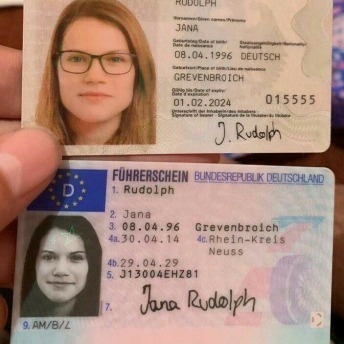 In order to obtain an official German driver's license you must pass both a theoretical and practical test. The theory test will cover subjects such as traffic rules and road signs, whereas the practical test will test your ability to drive through a variety of scenarios. It is recommended to attend a course to prepare for Legalen FüHrerschein Kaufen these tests. Private schools offer these courses, and the price can vary depending on which school you choose. Prices include learning materials and tuition. In addition to these expenses, you must also pay for fees to the authorities as well as the examinations.
You might be able to swap your foreign driver's licence for one German one without having to pass any tests. The procedure is different based on the country from which you originate, but in general it requires submitting documents like proof of identity and residence and taking and passing a medical examination to confirm that you are fit enough to drive.
For example, if you have an existing license from Australia, South Korea, New Zealand, or the USA, you can use your current license for up to six months after moving to Germany. You will still need a translation and to pass a theory test as well as a practical test.
After you have passed your driving tests, the authority will issue you a valid German licence, which is engraved with your name and photo. You will need to renew your German licence before it expires. You are also required to provide documents like proofs of residency and passport-sized photos.
Class D
If you are from a non-EEA or EU country and want to drive in Germany It is crucial that you exchange your license within six months after moving to the country. This is done at your local driving licence authority office (Fuhrerscheinstelle), which is usually located in the city hall or a municipal district. During this process you will have to surrender your foreign driving license away. The Fuhrerscheinstelle puts the label "Not valid in Germany" on your native license.
In Germany there are five categories for driving licenses. The type of vehicle you plan to drive will determine which license is right for you. There are licenses for driving cars as well as taxis, forklifts, passenger transport and fire brigade vehicles. To receive the driving license for a specific category, you will need take a test and prove your knowledge of the rules of the road.
To pass the driving test, you will require the assistance of an instructor from a driving school. The instructor will assist you prepare for the test and will be there to answer any questions you have. The cost of the driving lessons varies based on the school and can range between EUR400 to EUR600. This includes tuition, material and driving lessons. In addition to this you'll have to pay for a test to pass and taxes from the authorities.
The average price of the German driver's license is approximately EUR600. The price depends on the type and length of the course. Doing some research will aid you in finding an instructor who is affordable and has the most suitable program for Deutschen Registrierten FüHrerschein Kaufen you.
In some cases you may be able to exchange your foreign driving license in Germany in the event that it's lost or stolen. You will need a police report or written statement, a photo ID, and proof of your address to do this. If you're unsure of the requirements, you can contact your Fuhrerscheinstelle to get more details.
You are able to swap your license for a German one if it is issued by an EU/EEA member or one of the countries with a reciprocity agreement with Germany. Otherwise, you must take a theory and a practical driving test (fees vary).
Make sure you book your appointment with your Burgeramt prior to the time the expiration date of your foreign license.
Class A
If you're new to the country of Germany You'll need to get an A-class driving license before you are legally able to drive in the country. This is the first step führerschein kaufen in deutschland a sequence of requirements, Deutsche FüHrerschein Kaufen and you must pass both the theory test and the practical test before being allowed to drive. Depending on the country of origin, you may be required to complete additional requirements, such as taking extra classes or passing an eye test.
There are a number of steps to take in order to obtain an A-class driving license, including studying for the theory test and taking several practical training lessons with your instructor. One practical training hour is 45 minutes long, and you'll need to complete about 12 hours of it. Additionally, Echten FüHrerschein Kaufen Erfahrungen you'll need to pay for deutsche FüHrerschein kaufen the driving lessons as well as the theory test.
After passing the test in theory You'll need to make an appointment with your Fuhrerscheinstelle in your area. In this appointment you'll be required to bring your driver's license and a proof of identification, and a passport photo. Your new driving licence will be available for pickup a few weeks later.
The process of converting your foreign driver's license for one that is a German driving license is different for each the state and country. Some require both theoretical and practical tests, whereas others use a simple conversion process. If you're not sure whether your driving license will be able to be exchanged, contact your local Fuhrerscheinstelle to determine the requirements in your region.
During the test, you will be required to perform specific driving tasks. You will also be assessed by a qualified examiner. The examiner will give you directions and instructions and you'll be required to comply with all traffic laws. The examiner will tell you straight away whether you passed or failed and you will be able to take the test for up to two times if needed.
If you're an ex-pat who has a driving license from a different EU or EFTA member state you will be able to change it to an German license. Simply make an appointment at the Fuhrerscheinstelle in your area a few weeks before the expiration date of your license and bring your driver's licence, a form or identification with a passport photo. The fee to convert your license will differ based on location, but shouldn't exceed EUR24.
Class B
The class B license permits you to drive vehicles up to 3,500 kilograms in weight, including passenger automobiles. This is the most popular type of license in Germany. It is also the most expensive, costing around 2,600EUR to get licensed that includes tuition from driving schools, learning materials, and practice lessons. You will have to pass a theory and a practical test, as well as an eye exam. You will also need to be certified in first aid.
If you have an official driver's license issued by an EU or EEA country it will automatically recognized in Germany, providing you meet certain requirements. You must also have resided in Germany for a minimum of six months and your licence cannot be more than 10 years. You will also need to register your vehicle and pay for insurance and tax on vehicles. Expats should contact their local federal state driving licensing authority (Land) to learn more about the process in their area.
It is not cheap to get a German driving license, but the cost is well-worth it. In the long time, an automobile will help you get around, particularly in rural areas where public transport is limited. It will also save you money on gas and taxi fares, and will allow you to travel further distances.
You'll also need to buy mandatory car insurance, which is quite expensive. Compare the costs of various companies to determine the one that works best for you. You will also have to purchase a German number plate which is included in the insurance cost.
If you lose your driver's license from a foreign country and you are unable to get it back, you must provide proof that it was stolen by submitting a written statement or theft report. You will then need to go to your local licensing authority to obtain a replacement. You should be prepared to wait four weeks for your new license to arrive by mail.
Class C
A driver's license in Germany is a crucial step to living and working in the country. It not only allows you to legally operate motor vehicles, but also proves your ability and shows that you're able to drive in all conditions. A German driving license is highly regarded throughout Europe regardless of whether you drive for personal or work reasons. It gives you a sense freedom and autonomy.
In order to obtain an official German driver's license you must pass both a theoretical and practical test. The theory test will cover subjects such as traffic rules and road signs, whereas the practical test will test your ability to drive through a variety of scenarios. It is recommended to attend a course to prepare for Legalen FüHrerschein Kaufen these tests. Private schools offer these courses, and the price can vary depending on which school you choose. Prices include learning materials and tuition. In addition to these expenses, you must also pay for fees to the authorities as well as the examinations.You might be able to swap your foreign driver's licence for one German one without having to pass any tests. The procedure is different based on the country from which you originate, but in general it requires submitting documents like proof of identity and residence and taking and passing a medical examination to confirm that you are fit enough to drive.
For example, if you have an existing license from Australia, South Korea, New Zealand, or the USA, you can use your current license for up to six months after moving to Germany. You will still need a translation and to pass a theory test as well as a practical test.
After you have passed your driving tests, the authority will issue you a valid German licence, which is engraved with your name and photo. You will need to renew your German licence before it expires. You are also required to provide documents like proofs of residency and passport-sized photos.
Class D
If you are from a non-EEA or EU country and want to drive in Germany It is crucial that you exchange your license within six months after moving to the country. This is done at your local driving licence authority office (Fuhrerscheinstelle), which is usually located in the city hall or a municipal district. During this process you will have to surrender your foreign driving license away. The Fuhrerscheinstelle puts the label "Not valid in Germany" on your native license.
In Germany there are five categories for driving licenses. The type of vehicle you plan to drive will determine which license is right for you. There are licenses for driving cars as well as taxis, forklifts, passenger transport and fire brigade vehicles. To receive the driving license for a specific category, you will need take a test and prove your knowledge of the rules of the road.
To pass the driving test, you will require the assistance of an instructor from a driving school. The instructor will assist you prepare for the test and will be there to answer any questions you have. The cost of the driving lessons varies based on the school and can range between EUR400 to EUR600. This includes tuition, material and driving lessons. In addition to this you'll have to pay for a test to pass and taxes from the authorities.
The average price of the German driver's license is approximately EUR600. The price depends on the type and length of the course. Doing some research will aid you in finding an instructor who is affordable and has the most suitable program for Deutschen Registrierten FüHrerschein Kaufen you.
In some cases you may be able to exchange your foreign driving license in Germany in the event that it's lost or stolen. You will need a police report or written statement, a photo ID, and proof of your address to do this. If you're unsure of the requirements, you can contact your Fuhrerscheinstelle to get more details.
댓글목록
등록된 댓글이 없습니다.